


Wheelie Life: Moto Stunt
4.876.00 Reviews
App Specs
- Version
- 3.9
- Updated On
- License
- Free
- Downloads
- 5,000,000+
- Developer
- iJ Sound
- Categories
- Racing
- Platform
- Android
Screenshots

 Analysis by AppCompare
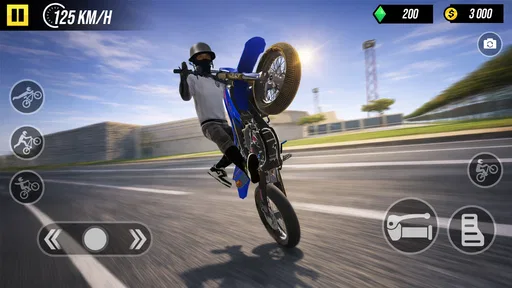
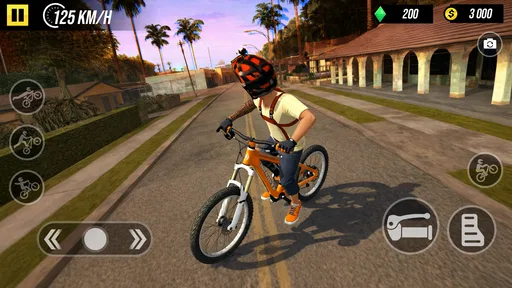
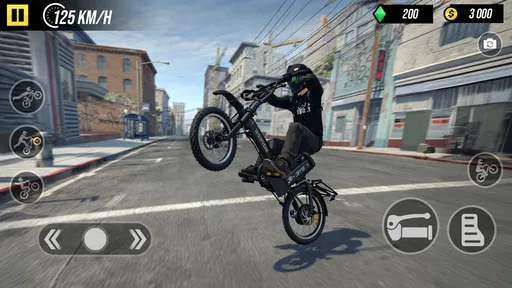
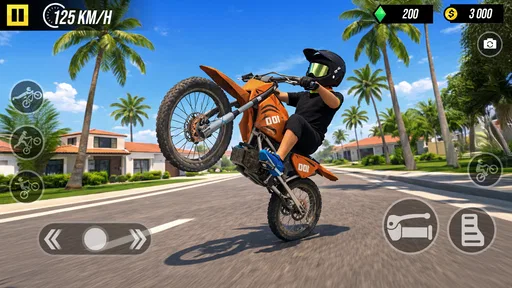
I like the idea behind Wheelie Life: Moto Stunt: instead of treating a motorcycle race as a straight dash to the finish, it makes balance and timing the point. You ride through city traffic, lift the front wheel, and try to keep a stunt going without losing control. That focus gives this racing game a more hands-on feel than a conventional lap racer, though it also means the fun depends heavily on whether you enjoy practicing a small set of demanding skills.
It is a free game from iJ Sound, rated for Everyone, and its appeal is easy to understand: short attempts give you a reason to try again, while a clean wheelie feels earned rather than automatic. The game has a 4.8 average from around 4,800 ratings and more than 5 million installs, so it has clearly found an audience. I would still think of those figures as a sign of broad interest, not proof that its particular stunt-focused style will suit every racing fan.
Where the riding takes practice
I find the learning curve here comes from coordinating two jobs at once: keeping the motorcycle balanced and reading the traffic ahead. In this section, I’ll focus on why a run can feel awkward even when the game is responding normally, and how small, deliberate changes can make practice more useful. That distinction matters before looking at the simpler checks that can rule out setup trouble.
Balance matters more than speed
The first thing I would tell a new player is not to approach each run as a simple acceleration test. A wheelie asks for control: raise the front wheel, keep the bike steady, and react to the road and traffic before a small mistake ends the attempt. Flipping through a busy stretch can look spectacular, but the satisfying part is learning how much input is enough instead of holding the controls as if speed alone will solve everything.
That creates a familiar early hurdle. When a run ends quickly, it can be tempting to repeat the same movement with more force. I find it more useful to change one thing at a time: start the stunt more cautiously, pay attention to how the bike responds, then adjust your timing on the next pass. This turns a string of failures into practice rather than guesswork.
Traffic adds pressure because your attention is split between maintaining the stunt and reading what is ahead. If you focus only on the front wheel, you can miss the moment to react; if you stare only at the road, the bike can become difficult to manage. I recommend treating a run as two linked tasks: establish a controlled wheelie first, then look ahead and make smaller corrections as the city approaches.
The game is therefore better suited to players who enjoy improving through repetition than to people seeking a relaxed ride with little chance of interruption. Its premise rewards patience, and a short, imperfect attempt can still teach you something about your timing. If you want a racer where the main pleasure is choosing a route, tuning a vehicle, or cruising without a stunt challenge, this may feel too narrowly focused.
Worth Reading Before You Choose

Flipboard Shows What News Apps Must Do Beyond the Feed

Switching to Android Auto Means Rethinking Your Driving Routine

Google Calendar Makes a Crowded Week Easier to Manage

Ludo King Makes the Most of the Minutes Between Plans

Baby Panda World Brings Quick Play to Modern Phones, but Its Game Library Feels Busy

ESPN’s Live Game View Makes Following Close Games Easier
Why the camera and attention can feel demanding
Stunts naturally make it harder to judge what is happening around the motorcycle. When the front wheel is raised, the view of the road and your sense of spacing may not feel as straightforward as during ordinary riding. I would avoid making large corrections at the last moment. A steadier approach gives you more time to notice traffic and decide whether to preserve the wheelie or prioritize getting through the next section safely.
One practical habit is to separate learning from score-chasing. On an early run, pay attention to the handling and the point at which balance starts to slip; on a later run, try to carry that control farther through traffic. This is a more useful way to improve than judging every attempt solely by how dramatic the stunt looked. It also helps explain why a run can feel good even when it does not end with an impressive result.
Because the core activity is so specific, repetition is part of the design rather than an incidental drawback. That is a strength if you enjoy refining timing and a limitation if you expect a wide variety of racing activities. I would try it in short sessions at first. If the basic rhythm makes you want another attempt, the focused format is doing its job; if the same challenge becomes tedious quickly, more time may not change your opinion.
Setup checks before you blame the game
Before I decide a difficult run points to a device issue, I like to check the basics and repeat a comparable attempt. A consistent starting point makes it easier to tell ordinary stunt difficulty from a genuine interruption, while avoiding several changes at once keeps troubleshooting manageable. The next section turns that approach into a practical sequence for getting back to riding.
Keep the first session simple
Wheelie Life is listed for Android with a minimum operating-system requirement of version 8.0, and the current version is 3.9. Before installing or troubleshooting, I would check that your device meets that requirement and that the game has finished installing or updating. These are simple checks, but they can save you from interpreting an incomplete download or an unsupported device as a problem with the riding itself.
On a first launch, give yourself a moment to get comfortable with how the game responds before trying to combine stunts and traffic. A quiet, unhurried first attempt is more informative than immediately pushing for a long wheelie. If the motorcycle seems difficult to control, repeat the same basic action and compare what happens; changing several things at once makes it harder to tell whether the issue is timing, your input, or a temporary device slowdown.
I would also close other demanding apps if the game appears to stutter, then try again. That is a general device check, not a promise that every performance issue has the same cause. If the phone is already struggling with other games or animations, the problem may be broader than Wheelie Life. If other apps run normally but this one repeatedly behaves oddly, restarting it and checking for an available update are sensible next steps.
For a more reliable comparison, test the same kind of short run after restarting rather than comparing two very different attempts. A complex stunt in traffic is naturally harder to judge than a straightforward practice pass. Keeping the situation similar helps separate a genuine change in responsiveness from ordinary variation in your own timing.
Recovering from a rough run
When an attempt goes wrong, I would first ask whether the bike lost balance or whether the game itself stopped responding. Those are different problems and call for different responses. If the run simply ended after a misjudged wheelie, start again with a smaller adjustment. If the controls or display seem frozen, close and reopen the game; if the behavior continues, restart the device and check that the installation is up to date.
It is also worth avoiding a rapid sequence of repeated taps when the game appears to hesitate. Multiple inputs can make it harder to understand what the game registered, especially in a control-focused stunt. Pause briefly, let the current action resolve if possible, and then make one deliberate input. This is a small workflow change, but it helps you tell whether the problem was responsiveness or an accidental overcorrection.
If an update has just been installed, give the game a clean relaunch before deciding that something is broken. If it still fails in the same way across fresh attempts, note what you were doing when the issue appeared and whether the device has the required system version. That gives you a clearer basis for seeking help than a general report that the game “doesn’t work.” I would not repeatedly reinstall as a first response; start with the less disruptive checks.
There is another useful recovery technique for ordinary crashes and failed stunts: change only one part of your routine. For example, keep the same approach but begin the wheelie more gently, or keep your usual lift and focus on reacting earlier to traffic. Because this game’s challenge is concentrated in timing and balance, a controlled experiment can reveal more than an entirely different approach on every run.
When the device, not the ride, may be responsible
Not every rough session points to a game defect. Low available device resources, a temporary system slowdown, or an interrupted installation can affect how an app behaves. If the whole phone feels sluggish, try closing background apps and restarting before judging the game. If only one run feels awkward, though, it may simply be the normal difficulty of balancing a motorcycle while navigating traffic.
I would also distinguish visual discomfort from control trouble. A stunt-focused view can make it harder to read the road, even when the game is responding properly. Try a calmer run and watch whether the motorcycle reacts consistently to your inputs. If it does, the issue may be that the action is demanding rather than that the controls have failed.
When troubleshooting, avoid changing several device settings at once. A simple sequence—close the game, reopen it, restart the phone if needed, and check for an update—makes it easier to see whether anything helped. If the problem persists, the operating-system requirement and the exact circumstances of the failure are useful details to keep in mind. This approach is more practical than assuming that every crash or missed stunt has one obvious explanation.
Who will enjoy it, and who should pass
I’d choose this game for someone who enjoys refining a specific motorcycle skill in short, focused sessions, rather than someone looking for a broad mix of races or relaxed cruising. Its appeal depends on whether close control feels rewarding after a few imperfect attempts. In the final section, I’ll weigh that focused challenge against the kinds of racing experiences that may be a better fit.
A focused alternative to ordinary racers
Compared with the usual racing game built around laps, position, or a long list of tracks, Wheelie Life puts the motorcycle stunt itself at the center. That makes it a good fit for someone who wants a compact challenge they can pick up for a few attempts, or for a player who enjoys mastering balance more than competing in a conventional race. It is less compelling if you need a broad campaign, lots of different racing formats, or a calm open-road experience.
A realistic everyday use case is a short break between other tasks. You can make a few runs, concentrate on keeping one wheelie stable, and stop without needing to settle into a long session. I would not choose it when I want a low-effort background game, because traffic and balance both demand attention. It works better when you have a few minutes to focus and do not mind restarting after a mistake.
The game’s age rating is Everyone, which makes its audience broad, but its handling challenge still calls for patience. A younger or less experienced player may enjoy the spectacle of the stunts while finding the control less immediately forgiving. I would frame it as easy to understand but not necessarily easy to master: the basic goal is clear, yet consistency takes practice.
With 76 reviews and a 4.8 average rating, it has received very positive feedback, but I would not treat that as a substitute for matching the game to your taste. The central question is whether repeating a motorcycle stunt feels satisfying to you. If you enjoy small improvements and close calls, that loop can be rewarding. If you prefer steady progression or a wide range of objectives, a more traditional racing game is likely a better choice.
My practical verdict
I recommend Wheelie Life: Moto Stunt to players who want their racing challenge to come from precise wheelies and quick reactions in city traffic. The best way to approach it is to begin with controlled attempts, change one part of your technique at a time, and treat each run as practice rather than a test of reflexes alone. That makes the learning curve feel fairer and gives you a clearer sense of whether the handling suits you.
For a free racing game, it has a distinct purpose instead of trying to be every kind of racer at once. Its limitation is the same thing that gives it character: the stunt-focused loop may become repetitive if you are looking for many different activities. I would install it if the idea of refining a wheelie sounds more appealing than simply crossing a finish line, and skip it if you mainly want relaxed riding or a varied race series.
Overall, I see it as a focused pick for short, attentive sessions. Give the first few runs room for trial and error, check the device basics if performance seems unusual, and decide based on whether the balance-and-traffic challenge makes you want to try again. If that rhythm clicks, the game has a clear reason to stay on your phone; if it does not, a broader racing alternative will probably hold your interest longer.
Pros
- Easy-to-learn controls make it accessible to casual players.
- Trick-focused riding gives each run clear goals to pursue.
- Short sessions work well for quick play on mobile.
- Bike and rider customization adds a personal touch.
- Simple presentation keeps the focus on performing stunts.
Cons
- Balancing the bike can feel unforgiving for new players.
- Repeatedly attempting the same tricks may become monotonous.
- Progress can depend heavily on precise timing and practice.
- Stunt-focused gameplay offers limited variety between runs.
- Ads or in-app purchases may interrupt or limit progression.
FAQs for Wheelie Life: Moto Stunt
What is Wheelie Life: Moto Stunt?
Wheelie Life: Moto Stunt is a motorcycle stunt game focused on performing and maintaining wheelies. You control a bike as you ride, balance on the rear wheel, and aim to keep your run going without crashing. Its appeal is centered on timing and control rather than a detailed story, so it may suit players looking for short, skill-based sessions.
How do you play Wheelie Life: Moto Stunt?
The main challenge is managing your motorcycle’s acceleration and balance while lifting the front wheel. Small adjustments matter: pushing too hard can cause a fall, while losing momentum can end a wheelie. Spend time learning how the controls respond, and make gradual inputs instead of holding them continuously. The exact control layout and available options may vary by version or device.
Is Wheelie Life: Moto Stunt suitable for beginners?
Beginners can try the game, but the balance-based riding may take practice. Early attempts may end quickly while you learn when to accelerate and how to keep the bike steady. Short practice runs are useful for getting familiar with the physics and controls. Players who prefer straightforward progress or forgiving mechanics may find the learning curve less appealing at first.
Can I play Wheelie Life: Moto Stunt offline?
Offline availability can depend on the version of the game and how it is distributed, so check the app-store listing and test the game after installation if playing without internet is important to you. Core riding gameplay may be accessible without a connection in some versions, while advertisements, updates, or online features could require internet access.
Is Wheelie Life: Moto Stunt free, and does it include ads or in-app purchases?
The price, advertisements, and optional purchases can differ between the Android and iOS versions and may change over time. Before downloading, review the current store listing for the price and any in-app purchase disclosures. If ads or purchases are present, they may affect the experience, but their availability and frequency should be confirmed for the specific version you plan to install.


